
Friday Footnotes – ‘Queen’
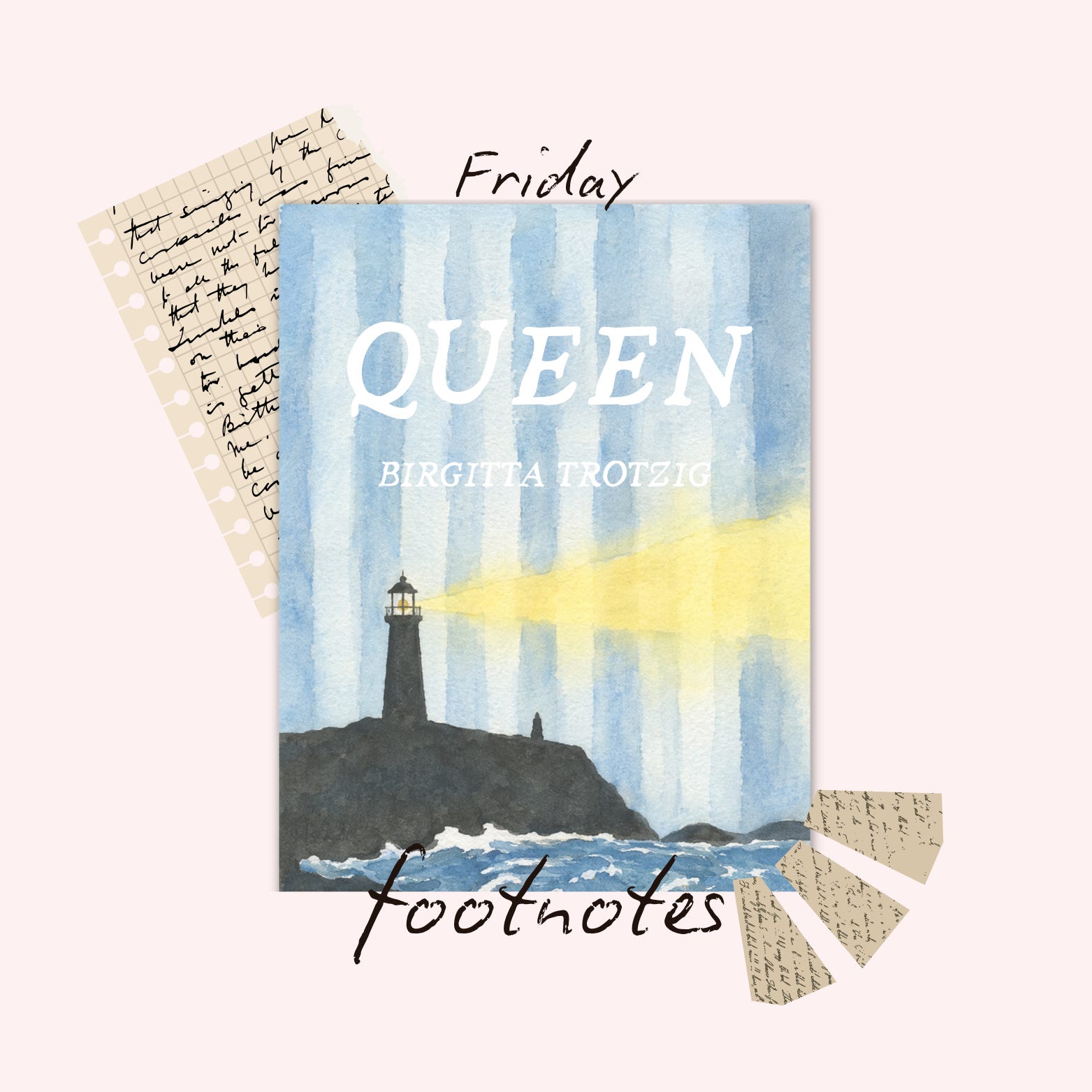
reflecting on reading Queen by Birgitta Trotzig, a Swedish family-saga translated into English for the first time by Saskia Vogel.

In this week’s Friday Footnotes, I’m reflecting on reading a Swedish family saga that has been translated into English for the first time since it was published in 1964.
I’ve always been a big fan of publishing house, Faber. They somehow always find a way to publish the most intriguing and unique stories, so when they announced they were introducing a new subscription service, Faber Heritage, which showcases forgotten classics and overlooked novels for £9 a month, I knew I had to sign up immediately.
The first book I recieved was Queen by Birgitta Trotzig (translated into English by Saskia Vogel) which I was incredibly excited about because I thoroughly enjoy reading translated fiction. I always feel like there’s something about the way translated fiction depicts feelings and emotions that is so raw and relatable.
I had no idea what Queen was about before a copy arrived through my letterbox, but to summarise, the story follows the lives of three siblings growing up on an isolated Swedish farm from the 1930s. And when a mysterious woman arrives from America, they begin to question everything they’ve lived for.
Now although the book follows the lives of three siblings, Judit, who is otherwise known and referred to as ‘Queen’ is by far the most fascinating character. She becomes practically the sole reason that the family farm continues to exist, as well as becoming a second (more predominant) mother for her youngest brother. She is referred to as beautiful in her own way, yet hard-faced and unwavering in her ability to keep going, despite all that life throws at her and her family. And whilst each family member around her struggles with an array of problems and traumatic events, Judit (Queen) remains steadfast and resilient. Yet, questions internally why it is that she just continues on as if nothing means anything to her. She is quite the remarkable character and eventhough she appears hard and untouchable to most of the other characters in the book, I, as a reader, always felt like she was more than what she let herself be to her family members.
Judit is a formiddle force who Sarah Moss, in her introduction to the text, likens her to Medea and Lady Macbeth; “women whose fatal flaw is their strength”. Certainly a depiction of admirable womanhood that is built on “fear, rage, love and resentent; the full range of human emotion” that I can certainly learn from and apply to the female characters in my WIP going forward. Creating women who need to be stronger in morals and character than their male counterparts in order to survive.
Queen is also an excellent example of how to do an omniscient narrator right. Allowing the reader to quietly observe scenes as they happen.
A story that will remain with me for some time.